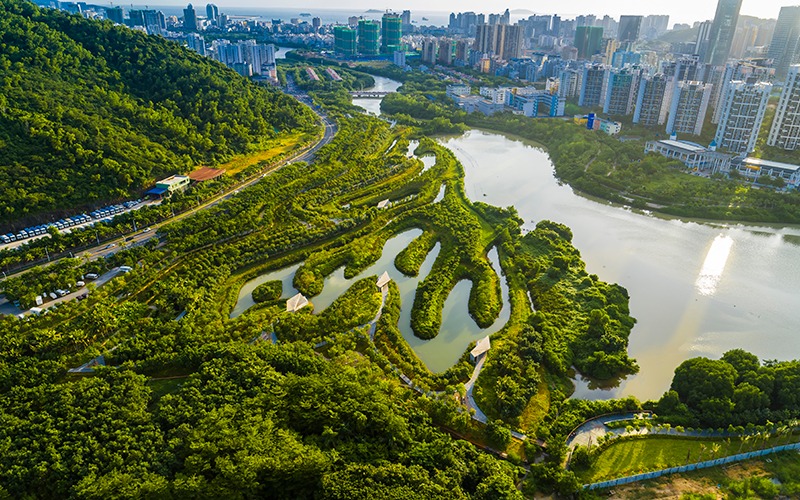
The US green cities livability trend is reshaping urban life across the country in 2026. Many American cities are now focusing on cleaner air, better transport, and more green spaces. These changes are not just about beauty. They are improving health, reducing stress, and making daily life easier for millions of people.
City leaders say the push for greener urban areas is growing fast. The US green cities livability movement includes new bike lanes, improved public transport, and large tree-planting programs. These efforts aim to reduce pollution and make cities more comfortable for walking and cycling.
One of the biggest changes is the expansion of bike lanes. Many cities have added protected lanes that separate cyclists from cars. This makes biking safer and encourages more people to use bicycles for short trips. As a result, traffic congestion is slowly improving in some urban areas. People also spend less time stuck in cars, which improves daily productivity and quality of life.
Public transport is also improving. Cities are investing in cleaner buses and upgraded rail systems. Some cities are switching to electric buses to reduce air pollution. These changes help lower greenhouse gas emissions and make transport more reliable. For many residents, better transit means easier access to jobs, schools, and healthcare.
Tree-planting programs are another important part of the US green cities livability effort. Cities are planting thousands of trees along streets, in parks, and in public spaces. Trees help cool down hot urban areas during summer. They also improve air quality by absorbing carbon dioxide and filtering pollutants. In many neighborhoods, these green spaces are becoming popular places for walking and relaxation.
Health experts say these changes are having real benefits. Cleaner air reduces breathing problems like asthma. More walking and cycling also improve physical fitness. Mental health can improve as people spend more time outdoors in green environments. Even small changes in city design can have a big impact on overall well-being.
Economists also point out that greener cities can support long-term economic growth. When cities are more livable, they attract workers and businesses. Companies prefer locations where employees have a good quality of life. This can help cities grow stronger economies over time. The US green cities livability trend is therefore not just an environmental issue, but also an economic one.
However, challenges remain. Building new bike lanes and transit systems requires funding. Some cities struggle with budget limits. Others face political debates over road space and construction projects. Not all communities agree on how quickly changes should happen. These disagreements can slow down progress.
There is also concern about fairness. Some low-income neighborhoods still have fewer green spaces and weaker public transport. City planners are now trying to address this gap. Many new programs focus on making sure all areas benefit from improvements, not just wealthy districts.
Climate change is another reason behind these efforts. Cities produce a large share of carbon emissions. By improving transport and adding more trees, cities can reduce their environmental impact. This helps the United States meet long-term climate goals.
Technology is also supporting the US green cities livability movement. Smart traffic systems are helping reduce congestion. Data is used to plan better bus routes and manage city services more efficiently. These tools make urban planning more accurate and responsive.
Public support is also growing. Many residents now prefer cities with clean air, safe walking paths, and green parks. Surveys show that people are more likely to stay in or move to cities that invest in livability. This puts pressure on leaders to continue reforms.
Experts believe the next phase will focus on connecting these efforts. Instead of separate projects, cities are starting to build complete systems. Bike lanes, transit, and green spaces are being designed together. This creates smoother and more effective urban environments.
The US green cities livability trend is still developing, but its impact is already visible. Streets are becoming safer. Air is becoming cleaner. Daily life in many cities is slowly improving. While progress is uneven, the direction is clear. American cities are moving toward a more sustainable and livable future.