A Renewed Offer for European Partners
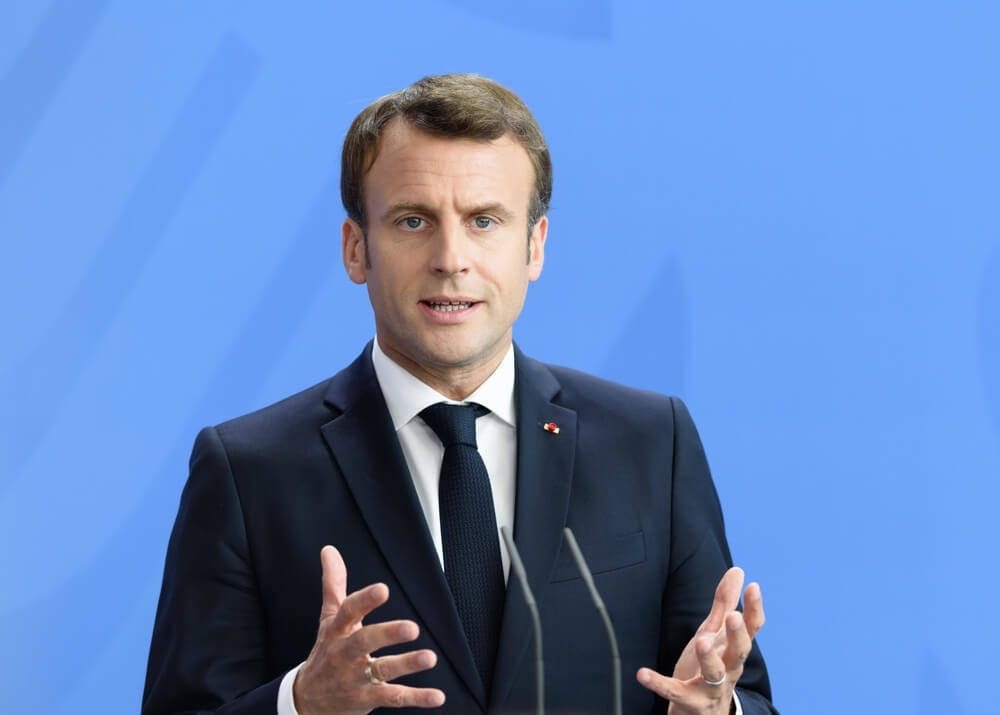
President Emmanuel Macron is expected to clarify France’s contribution to Europe’s nuclear deterrence in a major speech delivered from the Île Longue peninsula, home to the country’s fleet of nuclear-armed ballistic missile submarines. It will be his first detailed address on the subject since 2020, when he floated the idea of opening France’s nuclear doctrine to closer cooperation with European partners — an offer that initially received little response.
This time, the context has changed. Macron is likely to stress that any expansion of France’s nuclear role would complement, not compete with, the security umbrella provided by the United States. Recent discussions with German Chancellor Friedrich Merz and other European leaders suggest the proposal is now being taken more seriously.
Shifting Geopolitics Drive New Urgency
Europe’s security landscape has been reshaped by Russia’s full-scale invasion of Ukraine and the return of Donald Trump to the White House. Concerns about Washington’s long-term commitment to European defence — particularly after Trump’s controversial remarks about Greenland — have prompted fresh debate in EU capitals.
At the same time, the United States has signaled a desire to scale back some of its military presence in Europe as it pivots toward the Indo-Pacific. Combined with Russia’s development of hypersonic weapons, China’s rapid nuclear expansion, and uncertainty surrounding Iran, French officials believe global conditions are increasingly conducive to nuclear proliferation.
Despite this, French sources insist that any European nuclear dialogue would remain firmly aligned with NATO rather than challenge it.
No Arms Race, Just “Strict Sufficiency”
France maintains a doctrine of “strict sufficiency,” meaning it keeps only the number of nuclear warheads it considers necessary to deter aggression. With roughly 300 warheads, France’s arsenal is significantly smaller than the estimated stockpiles of the United States and Russia, each believed to exceed 3,500.
Officials emphasize that France rejects the notion of engaging in a nuclear arms race. Instead, its strategy centers on ensuring the capacity to inflict unacceptable damage on any adversary.
France has already deepened coordination with the United Kingdom through the Northwood Declaration signed last summer, establishing a joint Nuclear Steering Group and participating in shared exercises. As Europe reassesses its defence posture, Macron’s speech could mark a turning point in how the continent thinks about nuclear deterrence in an increasingly uncertain world.