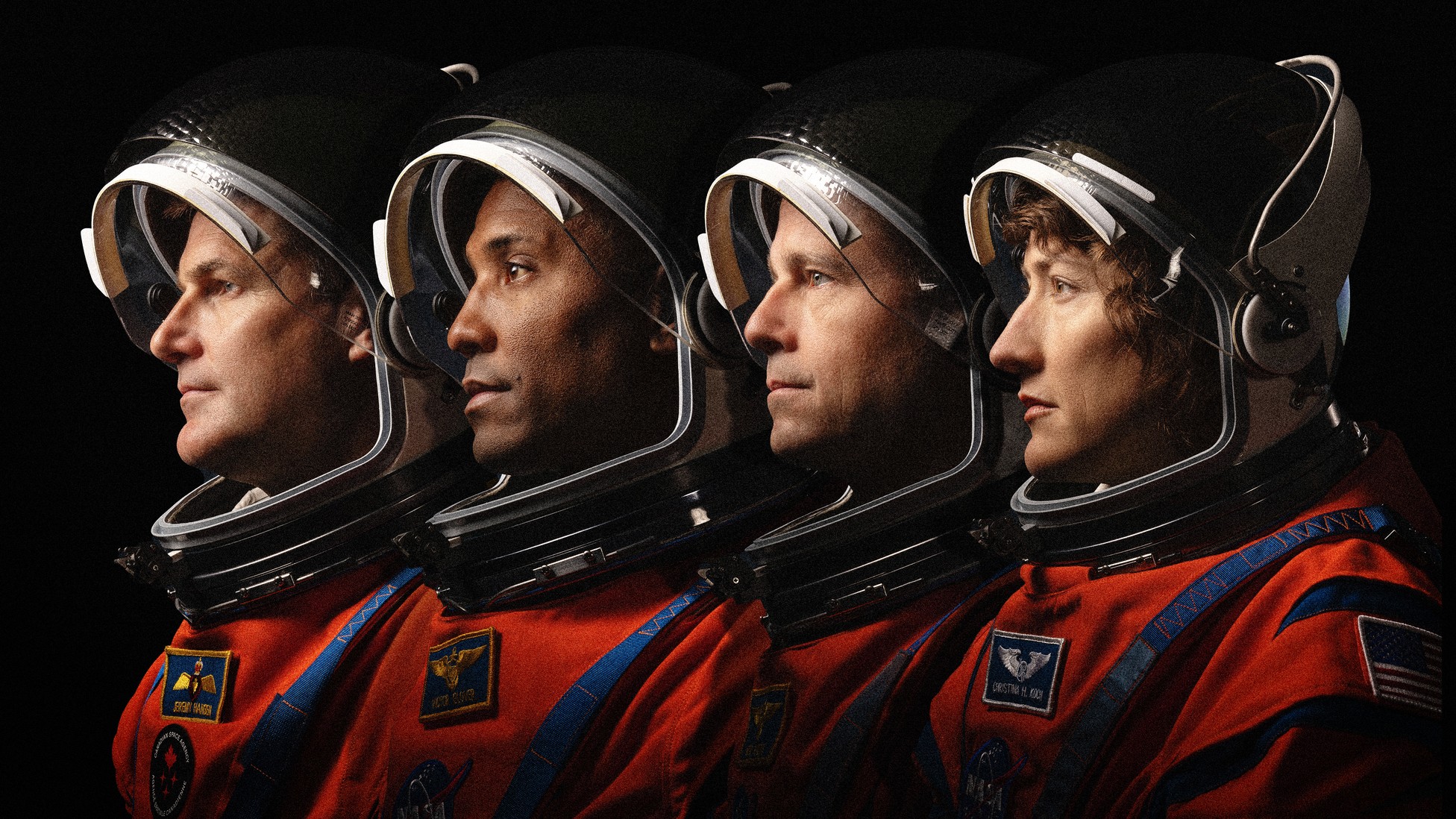
NASA’s Artemis 2 astronauts are gearing up for a historic mission to the Moon, marking a major milestone in space exploration. The upcoming flight will carry humans farther into space than ever before, following the success of Artemis 1.
The Artemis 2 crew has completed extensive training, including simulations, emergency drills, and zero-gravity exercises. NASA officials say the astronauts are confident and prepared for all aspects of the mission.
This mission is a key step toward returning humans to the lunar surface. Unlike Artemis 1, which was an uncrewed test flight, Artemis 2 will carry astronauts around the Moon and back, testing systems critical for future lunar landings.
The crew consists of experienced astronauts with diverse expertise in engineering, science, and piloting. Their combined skills ensure that the mission can respond to any challenge while gathering valuable data for future lunar operations.
NASA emphasizes that Artemis 2 is more than a technical achievement. It is part of a broader plan to establish sustainable human presence on the Moon and eventually prepare for missions to Mars. Each mission builds experience in deep-space travel, life support, and crew coordination.
Public excitement is growing as the launch date approaches. Schools and science centers have hosted programs to educate students about Artemis 2 and space exploration. Teachers say the mission inspires curiosity and interest in STEM fields among young learners.
Experts note that Artemis 2 is significant for international collaboration as well. NASA works with partners worldwide, sharing research and technology that can advance space exploration globally. The mission also highlights the importance of investing in science, technology, and human innovation.
Social media has amplified public interest. Fans of space exploration have shared artwork, animations, and messages celebrating the astronauts’ achievements. Videos of training exercises and behind-the-scenes preparations have gone viral, making the mission accessible to audiences of all ages.
NASA has confirmed that safety remains the top priority. All spacecraft systems have undergone rigorous testing to ensure reliability during launch, transit around the Moon, and re-entry to Earth. Contingency plans are in place to address potential challenges.
The Artemis 2 crew will also conduct experiments in space, collecting data on human health, radiation exposure, and spacecraft performance. These findings will inform future lunar missions and help improve life support systems for astronauts on longer journeys.
NASA officials describe Artemis 2 as a demonstration of human courage and curiosity. The mission will inspire future generations to pursue careers in science, engineering, and space exploration, fostering innovation and discovery.
Local communities near NASA centers have expressed pride in the astronauts’ preparation. Events celebrating the mission highlight the teamwork, dedication, and expertise required to accomplish such a complex journey.
By completing Artemis 2, NASA moves closer to returning humans to the Moon’s surface. The mission is a tangible example of progress in space exploration, combining advanced technology, human skill, and careful planning to achieve a historic goal.
The upcoming flight is a reminder of humanity’s drive to explore and understand the universe. Artemis 2 will push the boundaries of knowledge, inspire collaboration, and demonstrate the potential of human ingenuity in the most challenging environments.
As launch day nears, anticipation builds worldwide. The Artemis 2 mission symbolizes hope, discovery, and the enduring human desire to reach new frontiers, paving the way for future lunar landings and deep-space exploration.