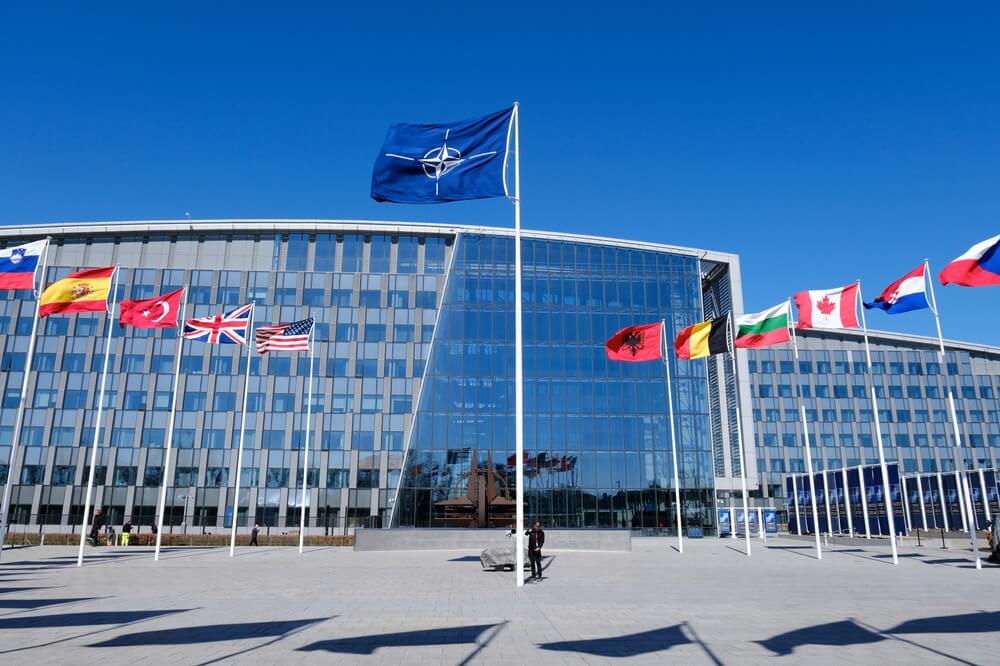
There was a clear message emerging from this week’s meeting of NATO defence ministers in Brussels: the alliance is changing. Both the United States and its European partners appear to agree that NATO must evolve — with Europe taking on a far greater share of responsibility for its own defence.
Yet while the direction of travel may be shared, the motivations on either side of the Atlantic are not entirely the same. Washington is eager to redirect more of its military attention toward the Indo-Pacific and other global priorities. European leaders, meanwhile, are increasingly aware that relying too heavily on a politically unpredictable U.S. administration carries its own risks.
Washington Calls for a “NATO 3.0”
Speaking at the gathering, U.S. Under Secretary of War Eldridge Colby outlined what he described as a “NATO 3.0” — a reimagined alliance in which Europe assumes primary responsibility for conventional defence on the continent.
Colby argued that European nations should provide the bulk of forces needed to deter or defeat aggression in Europe. His remarks echoed a longstanding American demand for greater burden-sharing, a theme that has intensified as the U.S. pivots toward the Indo-Pacific.
The message is not new, but the timing is notable. President Donald Trump has repeatedly questioned America’s commitment to NATO’s collective defence clause, even suggesting the U.S. might not defend allies who fail to meet defence spending targets. Those comments prompted NATO members last summer to agree on a new goal of spending 3.5% of GDP on defence — a significant increase.
According to NATO Secretary General Mark Rutte, this week’s talks signaled more than routine discussions. He described the meeting as pivotal, pointing to what he called a genuine shift in mindset and a stronger European defence presence within the alliance. Several countries — including Denmark, Estonia, Latvia, Lithuania and Poland — are already on track to meet the new spending target well ahead of schedule.
Europe Accepts a Bigger Role
European leaders were strikingly candid about the need to step up.
German Defence Minister Boris Pistorius acknowledged that the U.S. has long carried the bulk of responsibility for Europe’s conventional defence. He said it is only natural for Europeans to gradually take on more of that role in the years ahead.
France and Romania echoed similar sentiments. French Defence Minister Catherine Vautrin noted that Europe has already begun strengthening what she described as NATO’s “European pillar.” Romania’s Radu-Dinel Miruță emphasized the importance of expanding European defence production, ideally in coordination with NATO and the U.S., but with a clear objective: Europe must be capable of defending itself.
Dutch Defence Minister Ruben Brekelmans called for transparency between allies, advocating a “no-surprise” approach so any American drawdown is matched by a planned European build-up.
Recent events have only reinforced Europe’s urgency. Just weeks ago, President Trump threatened military action against fellow NATO member Denmark over Greenland, raising fresh concerns about stability within the alliance. NATO has since increased its vigilance in the Arctic as diplomatic talks continue.
A Delicate Rebalancing Act
The rebalancing is already underway. The U.S. has announced it will not replace a rotating infantry brigade in Romania, signaling the beginning of a gradual pullback. European countries are also assuming greater leadership roles within NATO’s command structure.
Still, the United States remains deeply embedded in the alliance’s military framework. While Europe has taken on leadership of key joint force commands, Washington continues to lead NATO’s land and air commands and has recently taken control of the Allied Maritime Command.
Rutte stressed that it remains crucial for the Supreme Allied Commander Europe — the officer responsible for drafting NATO’s military plans — to be American. That arrangement, he argued, guarantees a strong U.S. presence on the continent and reflects the economic reality that the United States still accounts for more than half of NATO’s total economic power.
The alliance may be entering a new chapter, one defined by a stronger European backbone. But even as responsibilities shift, both sides appear determined to keep the transatlantic bond intact — albeit on more balanced terms.