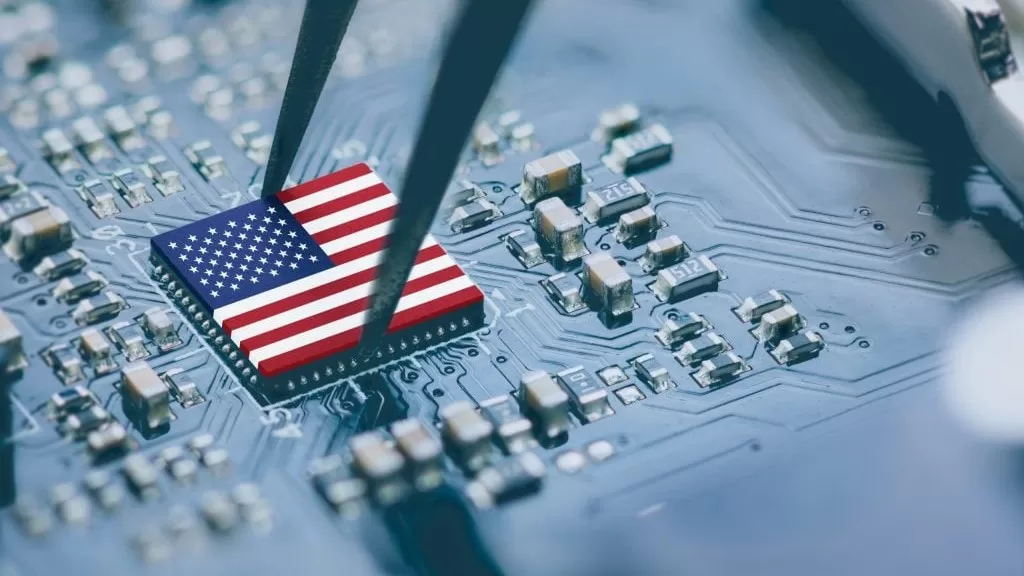
The U.S. government has invested $150 million in xLight to advance next-generation free-electron laser technology. This technology aims to transform semiconductor manufacturing and help meet growing global demand.
xLight, a leader in advanced laser systems, will use the funding to scale its innovative laser technology for industrial applications. Free-electron lasers are known for their precision and efficiency, which can improve production quality in semiconductor chips.
The investment reflects a growing focus on domestic semiconductor production. Governments and industries worldwide are seeking advanced technologies to reduce reliance on overseas chip manufacturing. xLight’s work could help the U.S. strengthen its supply chain and support high-tech industries.
Free-electron lasers work by accelerating electrons through magnetic fields. This creates highly tunable, high-powered light beams. Unlike traditional lasers, free-electron lasers can adjust their wavelength. This allows semiconductor manufacturers to process materials with exceptional precision.
Industry experts note that this technology can reduce defects in chips and increase production efficiency. By improving the manufacturing process, xLight’s lasers may enable faster production of advanced chips needed for AI, 5G, and other cutting-edge technologies.
xLight’s CEO said the funding will accelerate the commercialization of their laser systems. The company plans to partner with semiconductor manufacturers to integrate free-electron laser systems into production lines. This step is expected to create new jobs in high-tech manufacturing and research.
The Department of Energy and other U.S. agencies support such investments to boost innovation in advanced technologies. Their goal is to maintain the U.S.’s competitive edge in semiconductor technology. Analysts say that funding projects like xLight can help prevent supply chain disruptions and drive technological leadership.
Semiconductor demand continues to rise globally, fueled by AI, smartphones, electric vehicles, and cloud computing. However, traditional chip production faces challenges, including high costs and material limitations. Free-electron laser technology could overcome these challenges by offering flexible, precise, and efficient manufacturing methods.
xLight has previously demonstrated its laser systems in laboratory settings. With this government funding, the company will scale production and test its technology in real-world semiconductor factories. Early trials show promising results in accuracy, speed, and energy efficiency.
Experts say that investing in laser technology aligns with broader U.S. strategies to lead in next-generation semiconductors. The country aims to secure the supply chain while promoting research and development in emerging technologies. xLight’s innovation could play a key role in these efforts.
In addition to economic benefits, advanced laser technology could reduce environmental impact. Free-electron lasers use energy more efficiently and generate less waste than some traditional chip manufacturing methods. This aligns with global trends toward greener manufacturing practices.
The $150 million investment underscores the U.S. government’s commitment to supporting domestic high-tech innovation. As semiconductor technology continues to advance, tools like xLight’s free-electron lasers may become critical for maintaining competitiveness and meeting the demands of the global technology market.