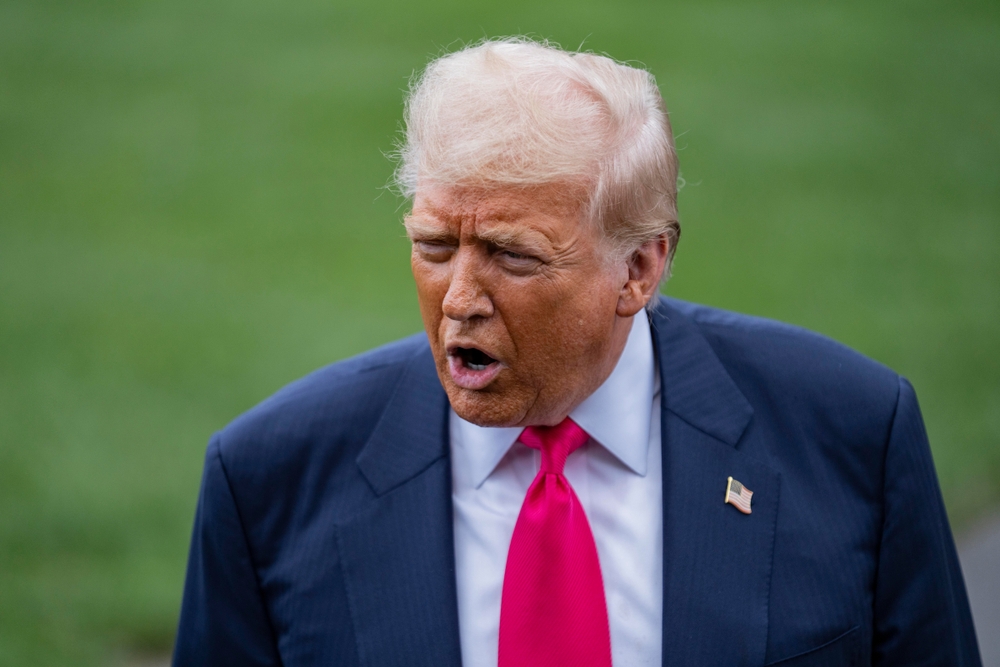
President Donald Trump has signed a short-term spending bill that ends the longest government shutdown in United States history. He approved the measure just hours after the House of Representatives voted 222 to 209 on Wednesday night. Two days earlier, the Senate narrowly passed the same legislation following days of tense debate.
In the Oval Office, Trump said the government would “resume normal operations” after “people were hurt so badly” during the 43-day shutdown. Since October, many federal services had been halted. Around 1.4 million government employees were either placed on unpaid leave or working without pay. Food aid programs were suspended, and air travel across the country suffered major delays.
Federal services begin to reopen
Government agencies are expected to restart operations within days, easing disruptions ahead of the Thanksgiving holiday. Air travel should stabilize as the Federal Aviation Administration restores normal staffing levels. The agency had reduced air traffic nationwide because of staff shortages during the shutdown.
The impact reached Congress as well. Wisconsin Republican Derrick Van Orden rode his motorcycle nearly 1,000 miles to reach Washington and cast his vote in the House before the bill went to the president’s desk.
However, the new law only funds the government until 30 January. Lawmakers will need to reach a broader agreement to prevent another shutdown early next year.
Trump blames Democrats for the stalemate
Before signing the bill, Trump accused Democrats of causing the prolonged government closure. “They did it purely for political reasons,” he said, urging Americans not to forget “what they’ve done to our country” in upcoming elections.
Although Democrats are the minority in the Senate, they managed to block an earlier version of the funding bill. Republicans were seven votes short of the 60 needed to pass it. Democrats demanded that the legislation include an extension of healthcare subsidies for low-income Americans, which are due to expire this year.
Republicans said healthcare could be addressed once the government reopened. On Sunday, eight Senate Democrats broke ranks and voted for the bill after winning a promise of a December vote on the subsidies.
The decision angered many within the Democratic Party, including House Minority Leader Hakeem Jeffries and California Governor Gavin Newsom, who both criticized the compromise.
Democrats split over the compromise
Senate Minority Leader Chuck Schumer said the agreement “fails to do anything of substance to fix America’s healthcare crisis.” But Virginia Senator Tim Kaine, one of the Democrats who supported the bill, defended his vote. He said federal employees in his state were “saying thank you” for restoring their pay and ending the shutdown.
Just hours before the House vote, Democrats welcomed a new member, Adelita Grijalva, who was finally sworn in after a long delay. She was elected on 23 September but could not take her seat earlier because the House had been out of session since 19 September. Grijalva now fills the seat once held by her father, Raul Grijalva, who died earlier this year.
New congresswoman supports push for Epstein files
Democrats quickly enlisted Grijalva’s support for a petition calling for the release of documents linked to the late financier Jeffrey Epstein. The petition must remain open for seven legislative days before advancing. After that, House leadership must schedule a vote within two legislative days.
House Speaker Mike Johnson surprised lawmakers by announcing he would hold that vote next week.
What the funding bill includes
The deal extends federal funding until 30 January. It provides full-year funding for the Department of Agriculture, as well as money for military construction and legislative agencies.
The bill guarantees back pay for all federal workers affected by the shutdown. It also secures funding for the Supplemental Nutrition Assistance Program, which provides food aid to one in eight Americans, until next September.
In addition, the agreement includes a promise of a December vote on healthcare subsidies — the key issue that divided lawmakers and kept the government closed for more than six weeks.