Artificial intelligence is increasingly shaping the U.S. economy, driving growth and innovation across multiple sectors. Companies like Walmart are partnering with AI leaders to integrate advanced technologies into daily operations and consumer services.
Walmart’s collaboration with OpenAI allows customers to make AI-driven purchases, streamlining the shopping experience and boosting efficiency. Analysts say such AI adoption is a key factor behind the current economic expansion in the country.
Beyond retail, AI is transforming industries including finance, healthcare, logistics, and manufacturing. Businesses are using AI tools to optimize processes, reduce costs, and enhance decision-making. This technology is also helping companies respond faster to market changes and consumer demand.
Economic experts note that AI integration contributes directly to productivity growth. “Artificial intelligence is not just a tech trend. It is driving measurable improvements in efficiency, output, and profitability,” said a senior economist.
The adoption of AI solutions is also creating new job opportunities. While some roles are shifting, the demand for AI specialists, data analysts, and tech engineers is rising rapidly. These positions support innovation and ensure that companies can fully leverage AI technologies.
Investor sentiment has been boosted by the rapid adoption of AI across key sectors. Companies that successfully integrate AI into their operations are seeing improved performance and stronger market positions. This trend has contributed to rising stock prices and broader economic optimism.
Consumer experiences are also improving due to AI integration. Personalized recommendations, faster service, and smarter logistics are enhancing satisfaction while increasing business efficiency. Retailers and service providers alike are investing heavily in AI systems to maintain competitive advantages.
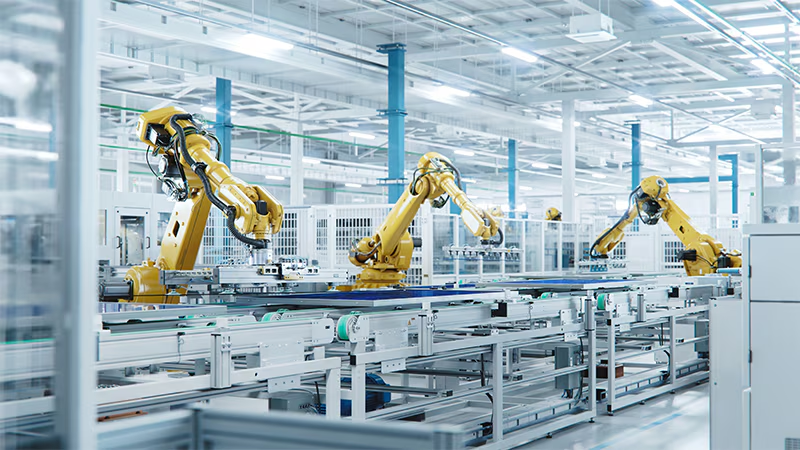
Manufacturing and logistics sectors are benefiting from AI-driven automation. These technologies allow for faster production cycles, lower error rates, and improved supply chain management. Analysts believe these improvements are contributing to steady economic growth.
Financial institutions are also leveraging AI for predictive analytics, fraud detection, and customer service enhancements. The technology’s ability to analyze large datasets in real time provides firms with actionable insights and competitive advantages.
The U.S. government and private sector are increasingly investing in AI research and development. Policy support, funding for AI startups, and collaboration with universities are helping to advance technology adoption nationwide.
Overall, AI economic impact is becoming a central factor in U.S. growth. Companies that integrate AI successfully are driving productivity, enhancing consumer experiences, and creating high-value jobs. This technology is helping the economy expand despite other challenges.
As more businesses embrace AI, analysts expect the technology to continue playing a critical role in economic performance. From retail to manufacturing, AI integration is shaping a future where efficiency, innovation, and growth go hand in hand.